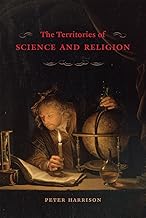
The Territories of Science and Religion by Peter Harrison, Chicago: University of Chicago Press, 2015, 320 pages. The battle between Science and Religion has been presented to the wider public as a struggle between reason and superstition. In the present intellectual climate, where the ghosts of logical positivism have been far from exorcised from the corridors of scientific thinking, any countering of the reigning attitude is most welcome. The volume under review is an absorbing historical account of the way …
Category: Articles

“Rule” 7 Parameters of Meaning – Rule 8: Never ground a teaching on disputed, ambiguous or debated texts (e.g. Matt. 10:23). At best they may serve to support a given position. Doctrines should come from the strongest possible connections between text and teaching. When one is setting forth a proposition, the cogency of it and the logical extent to which it may be propounded depends much on the quality of its substantiation. The gauge of “quality” would include things such …
A follow up to Scientism isn’t Science Naturalism is defined by Stewart Goetz & Charles Taliaferro in this way: Naturalism – very roughly – may be defined as the philosophy that everything that exists is a part of nature and that there is no reality beyond or outside of nature. – Naturalism, 6 Something being “a part of nature” is here meant to exclude the supernatural. Naturalism then is opposed to supernaturalism. It is seeing all things as natural and …
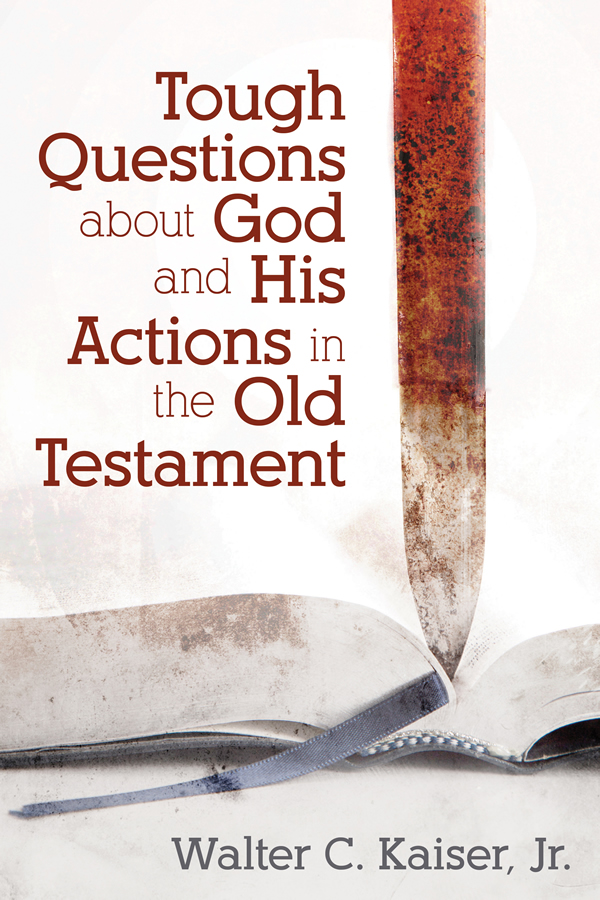
Tough Questions about God and His Actions in the Old Testament by Walter C. Kaiser, Grand Rapids: Kregel, 2015, 176 pages, pbk God Almighty will always have to suffer the inquisitions of his rebellious creatures, at least until He sorts out the waywardness epidemic of creaturely independence which is the bequest of the presence of sin. It won’t do to answer these jibes with “God can do anything He likes”, we must be prepared to educate unbelievers about the justice …

In the previous post I concentrated on men in England who helped me learn about the Bible and Theology. Quite unexpectedly, in God’s providence I came to the States in 1996 to work at a Baptist Church in Fairfield, California. That only lasted a year but I made some good friends. I also met the future Mrs H. there! Anyway, after leaving the church in Fairfield I started a church plant in Napa, which I pastored for over five years …
I thought I’d do something different for a change. I seldom write anything about myself on this blog, but I had the idea of putting down a few words about the men who trained me and to whom, to one degree or another, I owe a debt. None of them is responsible for how I turned out. The monster was self-made. But I want to introduce you to these men: The first man is David N. Myers M.Min., a knowledgeable …
Review of, A Commentary on the Manuscripts and Text of the New Testament, by Philip Wesley Comfort, Grand Rapids: Kregel Academic, 2015, 443 pages, hardback, $29.99 Philip Wesley Comfort is well known to students of the text of the New Testament. He has produced some informative works on the subject such as Early Manuscripts and Modern Translations of the New Testament, and Encountering the Manuscripts. Both productions, as well as the one under review, are marked with a clarity of …
Part One If we turn to Covenant theology’s own explanations of their system we find a curious dualism of frankness and subterfuge. I do not use “frankness” in the ethical sense, just in the sense that there is sometimes a willingness to face the text and deal with what it actually says. Likewise, by “subterfuge” I am not saying there is an unethical motive in these men, but that they almost instinctively avoid the clear implications of passages which undermine …
I think it is fair to say that the whole impetus for the covenants of redemption, works and grace in the Reformed Confessions stems from the assumption that the Old Testament must be read through the lens of the extra light of the New. If that assumption is flawed, as I believe it certainly is, then the whole project is in serious trouble. The release of the Westminster Confession of 1647, although it was preceded by over a century of …
In his Commentary on the Book of Genesis the Reformer John Calvin notices that a reason for God’s covenant promise to Noah was to encourage him in the hard task of obedience in the building of the Ark. By way of application he writes, For then do we freely embrace the commands of God, when a promise is attached to them, which teaches us that we shall not spend our strength for nought…It is especially necessary that the faithful shall …


