Part Two Jesus as the Word Even though the teaching of the “Word” or “Logos” appears prominently and explicitly in the prologue to John’s Gospel, the theme runs through the whole of the Gospel.[1] John stresses the words of Jesus as having special significance as words: Rhemata is used nine times for His words (5:47; 6:63, 68; 8:20;10:21; 12:47, 48; 14:10; 15:7), and three times for the words of God spoken by Jesus (3:34; 8:47; 17:8). John employs logos three …
Category: Worldview
With your indulgence, I’m going to repost a set of three studies on Jesus Christ as the Logos of God. They are a bit long, but hopefully useful. It may sound somewhat unseemly for anyone to refer to the Lord Jesus Christ as “the Logos of God,” but to conceive of Him (momentarily) in this abstract way opens up new lines of inquiry that are harder to see under His personal name. And, after all, the Apostle John was …
PART FIVE Natural Theology and Methodological Naturalism How can scientific naturalism be a child of Christian theology? That is a good question. One would think that such a methodology, disposed as it is to serve the worldviews of materialists and atheists, and presented by them as indispensable to good science, would have been contrived by them, but such is not the case. In fact Cornelius Hunter contends that, What we need…is a clear understanding of what naturalism is. Naturalism’s adherents …
Part Four The Definition of Science In the course of writing about the idea of science in his Systematic Theology, Reformed writer Michael Horton notes that “Britain’s Royal Society was founded by Puritans.” – The Christian Faith, 339 n.48 The Puritans saw no clash, either ontological or methodological, in pursuing science as a response to God’s revelation. The fact that God created the world and created man in His image meant that to find out what God had done was …
PART THREE After the Impossible Hurdle Evolution is the atheists’ way out. It is his escape clause from having to face the God who created him. People like Richard Dawkins may convince themselves that it makes atheism intellectually respectable, but they must first convince themselves that naturalism is intellectually respectable. The problem here is that, as in many walks of life, it is possible to arrange our arguments selectively and with rhetorical conviction while ignoring the issues, even the most …
PART TWO Life not from Earth It is a universal law which, as all scientific laws, has not witnessed an exception: life does not come from non-life. Yet evolutionists, of the non-theistic sort) must teach that it does. Going further back, ex nihilo nihil fit, out of nothing comes nothing. No one has ever seen or heard of something (i.e. that which has properties and permits predication) coming into existence from nothing (that which has no properties and does not permit …
Part One The Fusion of Confusion Evolutionists, except the rather small coterie of Theistic ones, believe every complex and meticulously ordered thing got here through mechanisms which we neither see now nor can see in the evidence left in the past. Even our cognitive faculties and the immaterial laws of logic and number “evolved.” The Big Bang is the most popular notion of the origin of the universe at the present time, although there is a significant lobby of dissidents. …
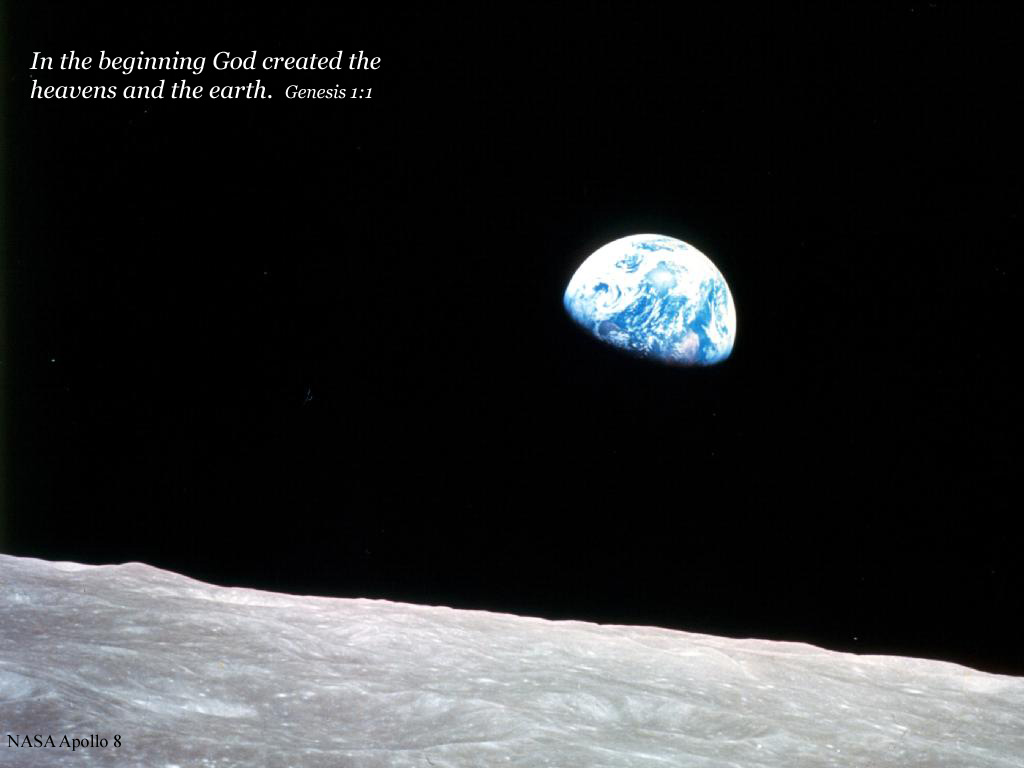
This is taken from an introductory lecture in the TELOS Course “The Doctrine of Man and Sin” When I look at your heavens, the work of your fingers, the moon and the stars, which you have set in place, what is man that you are mindful of him, and the son of man that you care for him? Yet you have made him a little lower than the heavenly beings and crowned him with glory and honor. You have …
Faith and Reason in Christian Perspective – Pt. 1 Faith and Reason in Christian Perspective – Pt. 2 In this third and final article on the roles of faith and reason I want to turn to examine some biblical passages, which, I think, really help us to understand why reason must be driven by faith. The first of these comes from the Garden of Eden. Autonomy: Our Default Position in the Use of Reason Although we do not have a …
PART ONE This completes the thoughts offered previously. 4. Systematic Theology Coming now to Systematic Theology the first thing that must be said is that the pretended stand for a partial system must be summarily dropped. Dispensational Theology cannot be switched out for the term Dispensational Premillennialism. In point of fact, I make bold to say that the notion of Dispensational Premillennialism is a bit of an odd bird without a full-orbed system to back it up. Most Dispensationalists have …
