Problems with the Promise and Fulfillment Motif? John Sailhamer is a critic of the common evangelical dogma that teaches a “promise – fulfillment” way of looking at the two Testaments, because by setting things up that way, the almost irresistible temptation will be to interpret the Old Testament through the lens of the New Testament, and in particular with the first coming of Christ culminating in the Gospel. Such an attitude threatens to turn the Old Testament, the Bible of …
Category: Hermeneutics
I have just returned from a nice rest with my family in Tennessee and will post a new item soon. Meanwhile, here are the responses I gave to a group of Evangelical scholars who really have trouble with Dispensationalism. I thought their objections and concerns were often unfair or wrong-headed, although sometimes they were just opposed to their own views. For those of you who have wished that yours truly would come into the 21st Century and list …
Creation and Communication Without the creation of Adam and Eve the whole sequence of days which preceded them would be a rather futile exercise. If the sequence found in the Bible’s very first chapter is to signify anything as a sequence, it had to be an actual seven day sequence. Otherwise it is hard to see why ordinal numbers would be used to describe the process. Also, without observers capable of recognizing and wondering after God’s wonders around them, God’s …
Here are the other short videos on major interpretative topics: …

“Rule” 7 Parameters of Meaning – Rule 8: Never ground a teaching on disputed, ambiguous or debated texts (e.g. Matt. 10:23). At best they may serve to support a given position. Doctrines should come from the strongest possible connections between text and teaching. When one is setting forth a proposition, the cogency of it and the logical extent to which it may be propounded depends much on the quality of its substantiation. The gauge of “quality” would include things such …
Part One If we turn to Covenant theology’s own explanations of their system we find a curious dualism of frankness and subterfuge. I do not use “frankness” in the ethical sense, just in the sense that there is sometimes a willingness to face the text and deal with what it actually says. Likewise, by “subterfuge” I am not saying there is an unethical motive in these men, but that they almost instinctively avoid the clear implications of passages which undermine …
In his Commentary on the Book of Genesis the Reformer John Calvin notices that a reason for God’s covenant promise to Noah was to encourage him in the hard task of obedience in the building of the Ark. By way of application he writes, For then do we freely embrace the commands of God, when a promise is attached to them, which teaches us that we shall not spend our strength for nought…It is especially necessary that the faithful shall …
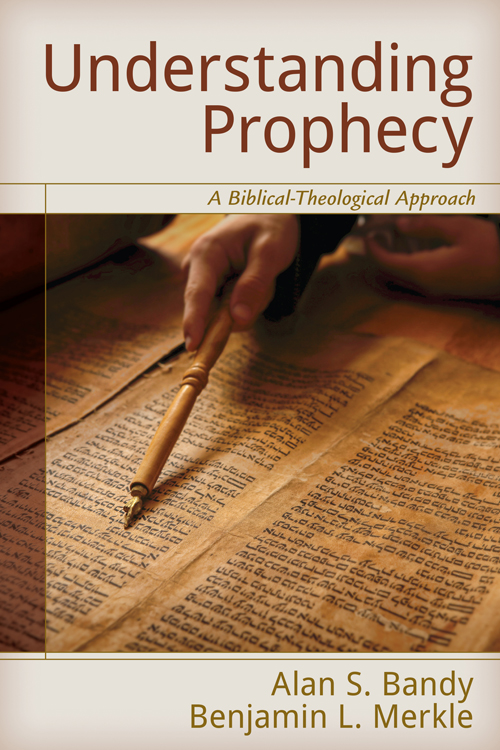
Review of Understanding Prophecy: A Biblical-Theological Approach, by Alan S. Bandy and Benjamin L. Merkle, Grand Rapids: Kregel, 2015, 264 pages, paperback N.B. This review is from the perspective of someone who is less than an enthusiastic supporter of symbolical cum typological interpretations of the Bible, so it will be mainly critical. However, for those in-tune with the approach of the writers, the book can be recommended as a good explication of the redemptive-historical method. This new book on prophecy …
After a ridiculously long delay, I have started to finish off my series on the Parameters of Meaning beginning with this one on Typology. I believe these guidelines will help Bible students avoid many pitfalls in interpretation by setting limits on what constitutes legitimate hermeneutics. For those of you interested here are the previous installments: Parameters of Meaning – Introduction Parameters of Meaning – Rule 1 Parameters of Meaning – Rule 2 Parameters of Meaning – Rule 3 Parameters of …

Part Three Speech-Act Theory and Biblical Interpretation On a more positive note overall is the matter of whether language is merely descriptive or whether it can be said to actually do something. This gets us into the subject of language as “speech-acts.” This view has been defined as follows: Speech-act theory is a set of pragmatically based principles that were developed at the edge of philosophy and linguistics. The major assumption is that language is not so much concerned with saying …