Part One Biblical Covenantalism tracks the covenants through Scripture for the sake of putting together a composite picture of God’s plan. The covenants are the backbone of Scripture. If we pay careful attention to these covenants as they arise, we will not be able to bypass the everlasting “covenant of peace” which God made with Phinehas and his descendents in Numbers 25. The fact that a covenant of this kind is casually passed over with barely a mention and not …
Category: Articles
Question: Which plainly stated Covenant in the Bible is most often neglected? The answer is the covenant which the LORD made with Phinehas in the Book of Numbers. The circumstances surrounding this covenant centers around the doctrine of Balaam as it was realized at Baal Peor (Cf. Num.31:16; Rev. 2:14). Amid the idolatry and fornication a Simeonite by the name of Zimri openly brought a Midianite woman into the camp of Israel and took her into his tent to have …
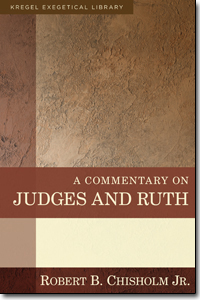
Review of Robert B. Chisholm, A Commentary on Judges and Ruth, Grand Rapids: Kregel Academic, 2013, 697 pp., $39.99. In the past Judges and Ruth have not been particularly well served by commentators (Leon Wood’s Distressing Days of the Judges being one notable exception). Many studies in the past were more homiletical than analytical. The Book of Judges presents some unique problems for the Bible interpreter. Such issues as the date of certain judges, the extent of their careers and …
This is a slightly revised version of what I wrote as a response to a question from progressive dispensationalist Darrell Bock about the inauguration of the Davidic Covenant at the first coming of Christ. Darrell Bock: How can a dispensationalist see the current application of the Abrahamic Covenant and the New Covenant (see the Last Supper in procuring forgiveness we now experience) and not see the Davidic covenant being initially realized by what Jesus has done, as Luke 3:16 …
This is a revision of a series I wrote some years back. The history of the interpretation of the Bible is a long and involved one. For many centuries some have approached the Scriptures supposing that they should be interpreted literally whenever possible. Others have believed that one ought to look deeper than the surface meaning to find its true spiritual center. Still others have believed that the Old and (to a lesser extent) the New Testament is opened up …
Faith and Reason in Christian Perspective – Pt. 1 Faith and Reason in Christian Perspective – Pt. 2 In this third and final article on the roles of faith and reason I want to turn to examine some biblical passages, which, I think, really help us to understand why reason must be driven by faith. The first of these comes from the Garden of Eden. Autonomy: Our Default Position in the Use of Reason Although we do not have a …
Recently K. Scott Oliphint of Westminster Seminary, Philadelphia has published a book which he has called Covenantal Apologetics. I reviewed the book here and recommend it. But I expressed reservations about the writer’s agenda of rebranding Van Til’s apologetic teaching in line with the book’s title. Coming as it does from one of the foremost representatives of Van Til’s presuppositional approach around the thesis deserves attention. As I said in my review, by “Covenantal” Oliphint means the ‘covenants’ of covenant …
Part One A Case Study: Harold Netland and the Demand for Neutrality As we further consider whether reason should be categorized separately to faith as properly functioning independent of it, I cite the example of an article by Harold Netland entitled, “Apologetics, Worldviews, and the Problem of Neutral Criteria.”[1] In Netland’s 1991 article we see an able but, I believe, misguided critique of presuppositionalist John M. Frame’s epistemology as set forth in his book The Doctrine of the Knowledge of …
This and the following piece are old posts to which I am giving more daylight. I hope to append a Part Three! It appears to me that one of the first things a faithful theologian needs to do is to straighten out the confusion brought about by the world’s separation of faith and reason. This relationship is so vital to a biblically fastened worldview that to neglect it will involve the believer in a host of conflicting beliefs and …
Intro. I don’t think anyone who employs Van Til’s approach is overjoyed with the label ‘presuppositionalism.’ (PA). Van Til himself wasn’t terribly happy with it. Neither was Greg Bahnsen, whose apologetic acuity made him perhaps Van Til’s most faithful and articulate disciple. Stressing the role of presuppositions did not mean, either for Van Til or Bahnsen, nor Frame or Oliphint, that evidences were not to have an important part to play within this approach. Van Til stated over and over …


